


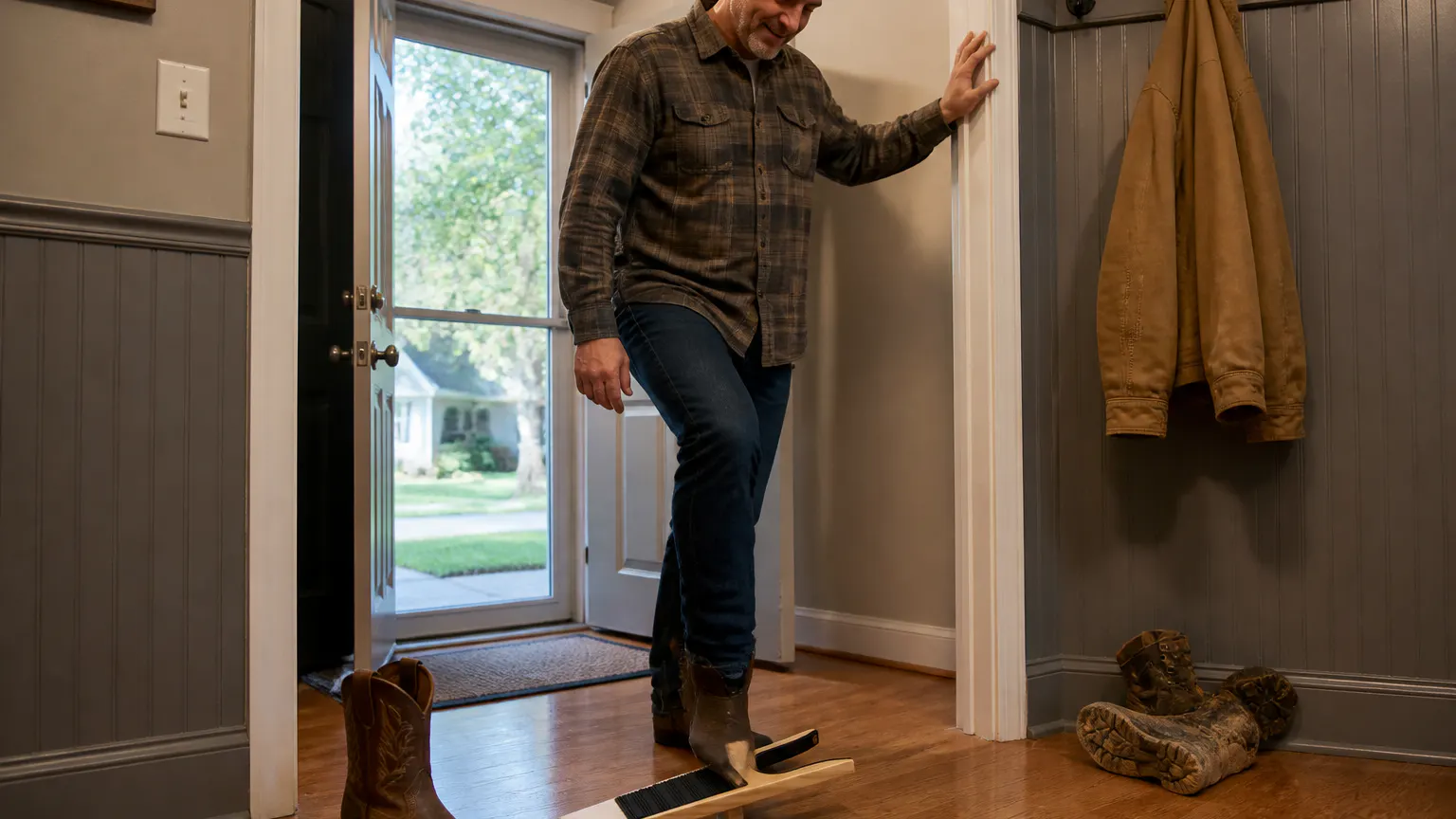
Boot jack + boot hook set
Stop fighting your own boots in your own doorway.
Plant one foot, seat the heel, lift. Three seconds, standing fully upright, hands never touching the boot - and the heel fork is rubber-lined, so it grips the heel counter without marking the leather.
- Rubber-lined heel notch
- Non-slip ribbed base
- Boot hook included

The stair-edge method. It works right up until it doesn't.
It was never your back. It was the tool.
Feet swell through a long day, and by evening the heel counter grips like it was glued on. Every method most people fall back on has a design problem - not a fitness problem.
- The $10 plastic jack that slides across the floorA smooth base on hardwood has nothing to bite into. Unstable base is one of the top complaints on the category's best-selling plastic jack.
- Folding jacks that fold at the wrong momentA buyer's own words: "Had to put my boot back on, ankle folded." A hinge under load is a hinge waiting to give.
- Glued joints that go brittleReported failure: "the glue got brittle and broke when it had any force on it." Force is the entire point of a boot jack.
- Bare-metal beetle notches too narrow for D-width bootsThe enthusiast's verdict on the metal ones: "Some on Amazon are too small for me d boots." And bare metal is what sits against your heel.
- Hooking the heel on a stair edge, a door frame - or asking your spouseYou are using furniture as a tool, or another person as a tool, because nothing in the house was built for this.
I no longer need someone to pull my hip out of socket when they help me take my boots off!
Verified buyer review
None of that is you getting older. It is five different tools that were never built to hold a heel while you stand up.
Plant. Seat. Lift. You never bend and you never touch the boot.
Three moves on the jack, one on the hook. Your own bodyweight does the anchoring - there is nothing to set up, adjust, or switch on.
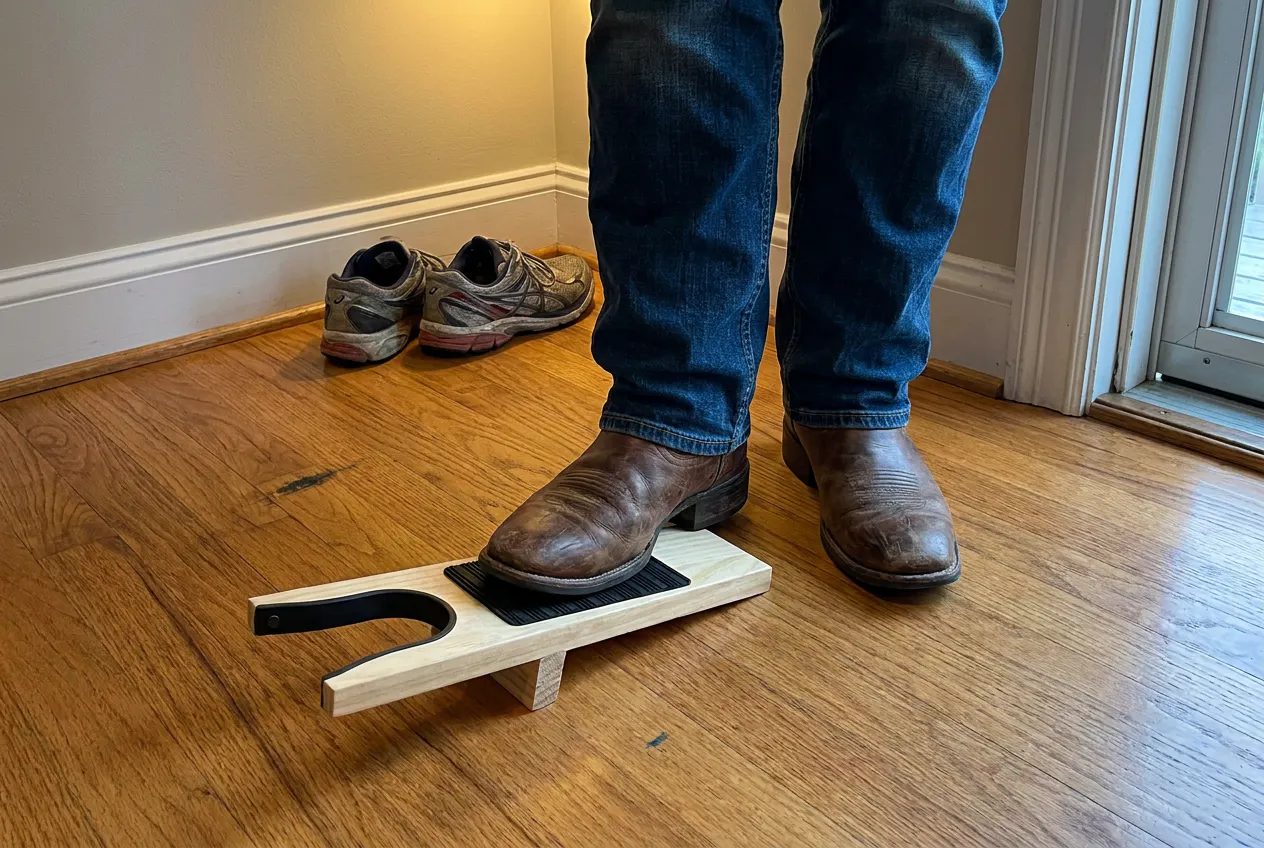
Step down onto the front platform
Set the wedge on the floor with the notch end pointing away from you, then step down onto the flat front platform with your opposite foot. Your own bodyweight pins the jack to the floor so it cannot slide or kick out from under you.
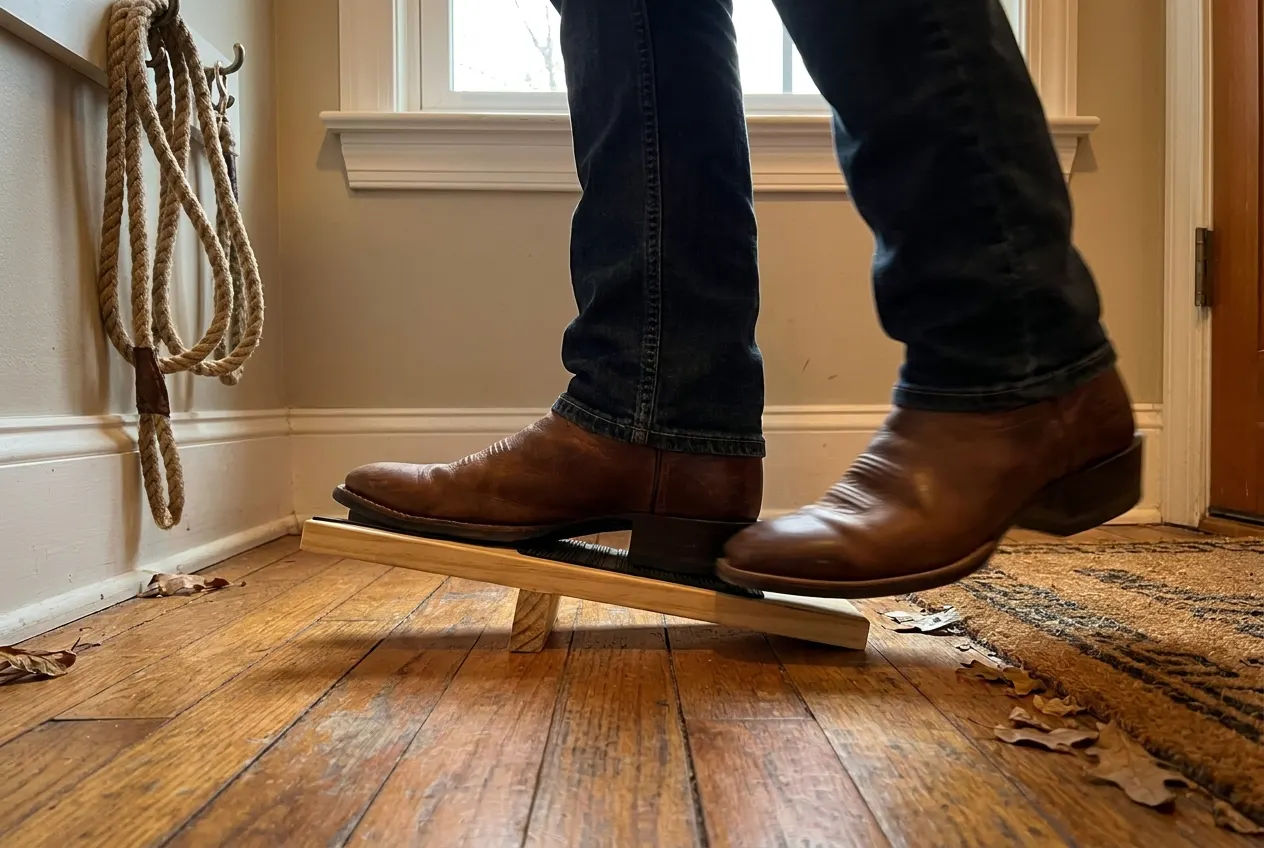
Slide the heel into the rubber-lined notch
Slide the heel of the boot you want off into the U-shaped notch until the rubber lining grips the back of the heel counter. The lining is what holds the boot - not bare wood, not bare metal against your leather.
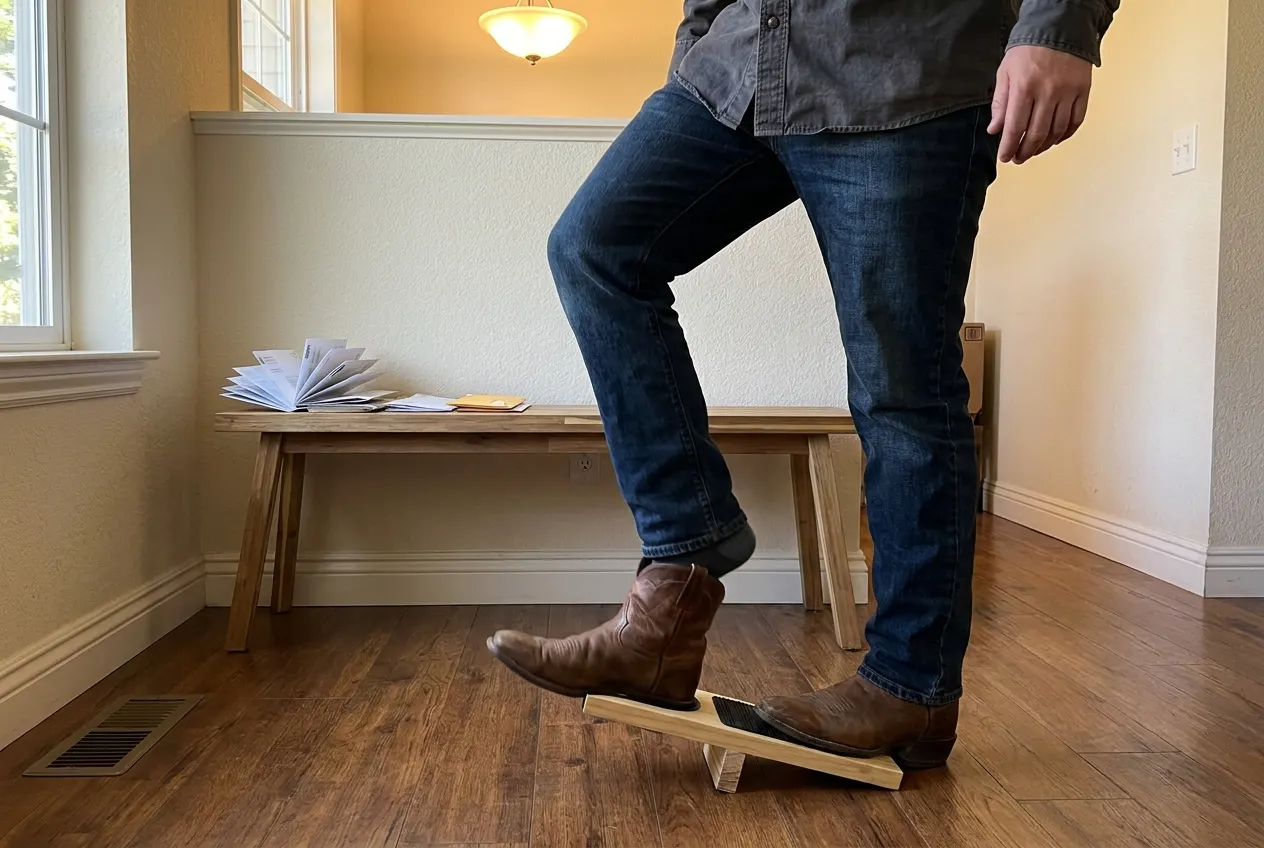
Draw the leg up and slightly back
Keep the planted foot down and draw the trapped leg upward and slightly back. The notch holds the heel while your foot lifts out - the boot slides off while you stay standing. No bending, no sitting, no hands on the boot. Repeat for the second one.
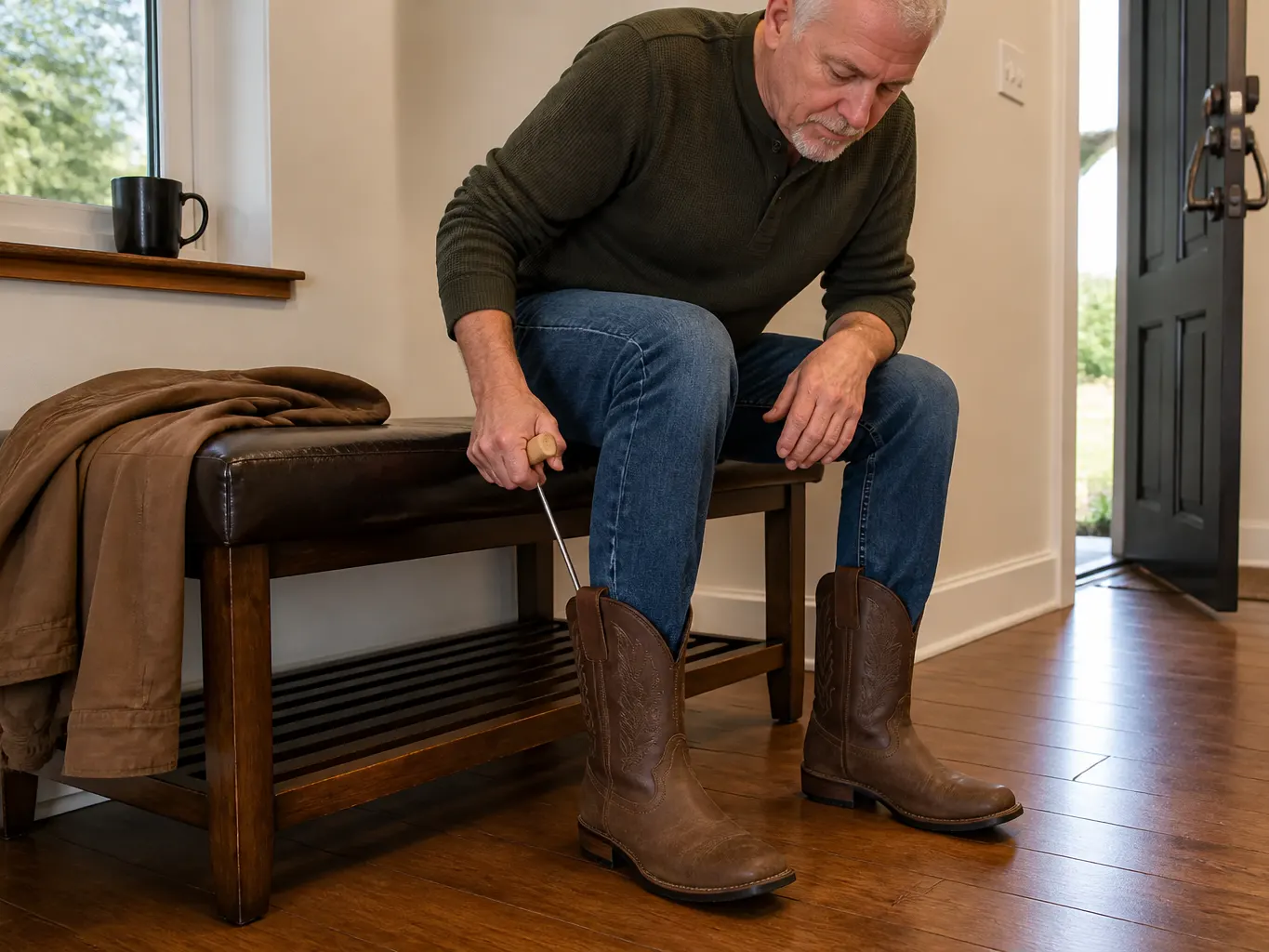
The T-handle hook for tomorrow morning
Drop the hook end into the boot's pull strap, grip the crossbar, and pull up while pushing the foot down. The T-handle spreads the pull across your whole palm instead of cutting into two fingers - which is the reason tall boots are a fight to get into.
No hinges. No folding mechanism. No moving parts. It is one solid piece of wood, a rubber lining, and a ribbed grip pad - a lever that works on physics, not on a mechanism that can fail.
Built where it matters
Where The Cheap Ones Fail Is Where We Spent The Money
Three things decide whether a boot jack is worth owning: what touches your leather, whether it stays put under you, and whether it lasts. Here is all three, up close.
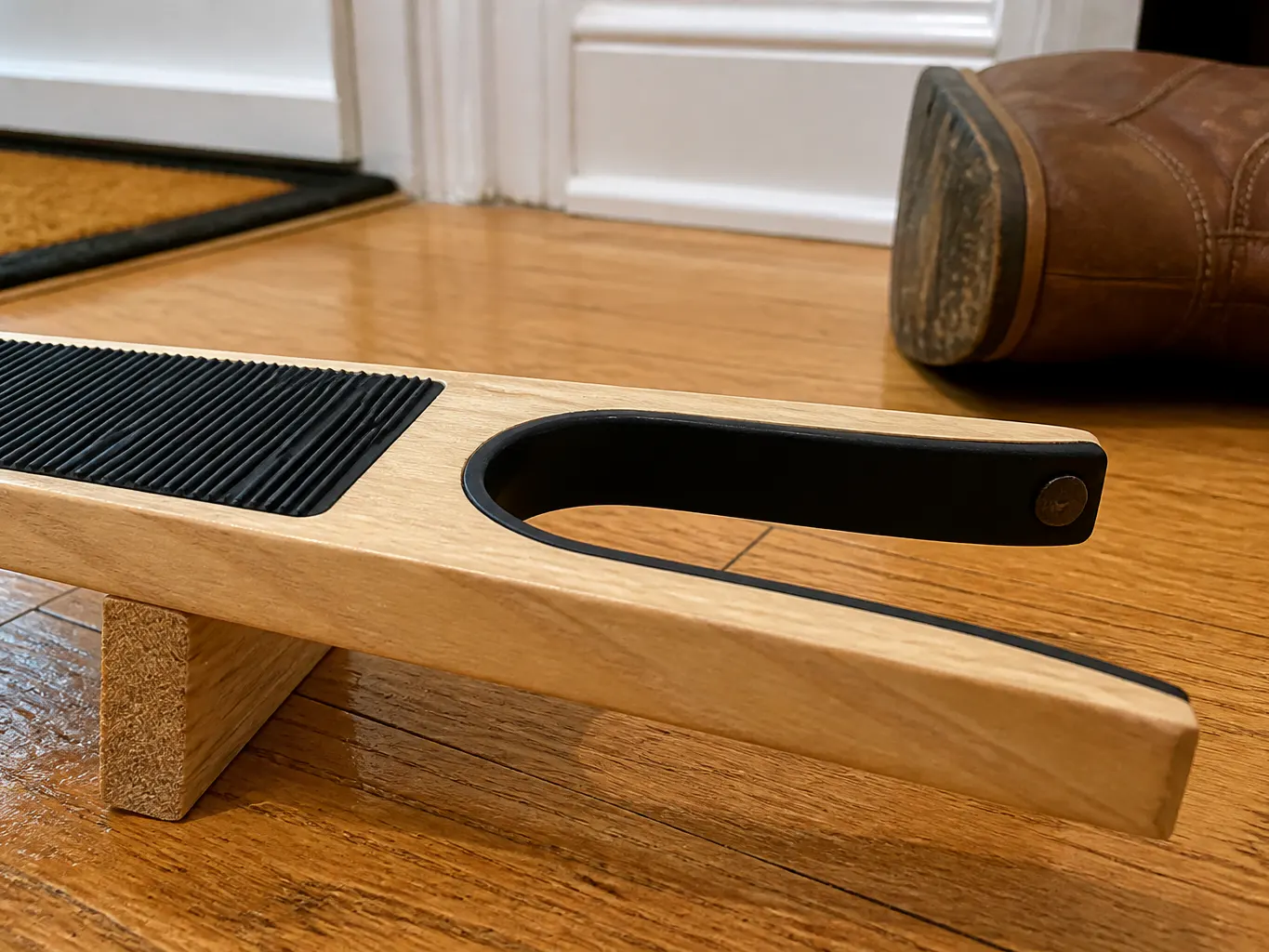
A rubber-lined heel fork - nothing bare ever touches the leather
The U-notch is lined with a soft rubber strip, so the only thing pressing against the back of your heel counter is rubber - not raw wood, not bare plastic, not cast metal. And the opening is cut wide: 9.5cm across the outside with a 6cm inner heel channel, so a wide D-width heel seats properly instead of wedging at the mouth.
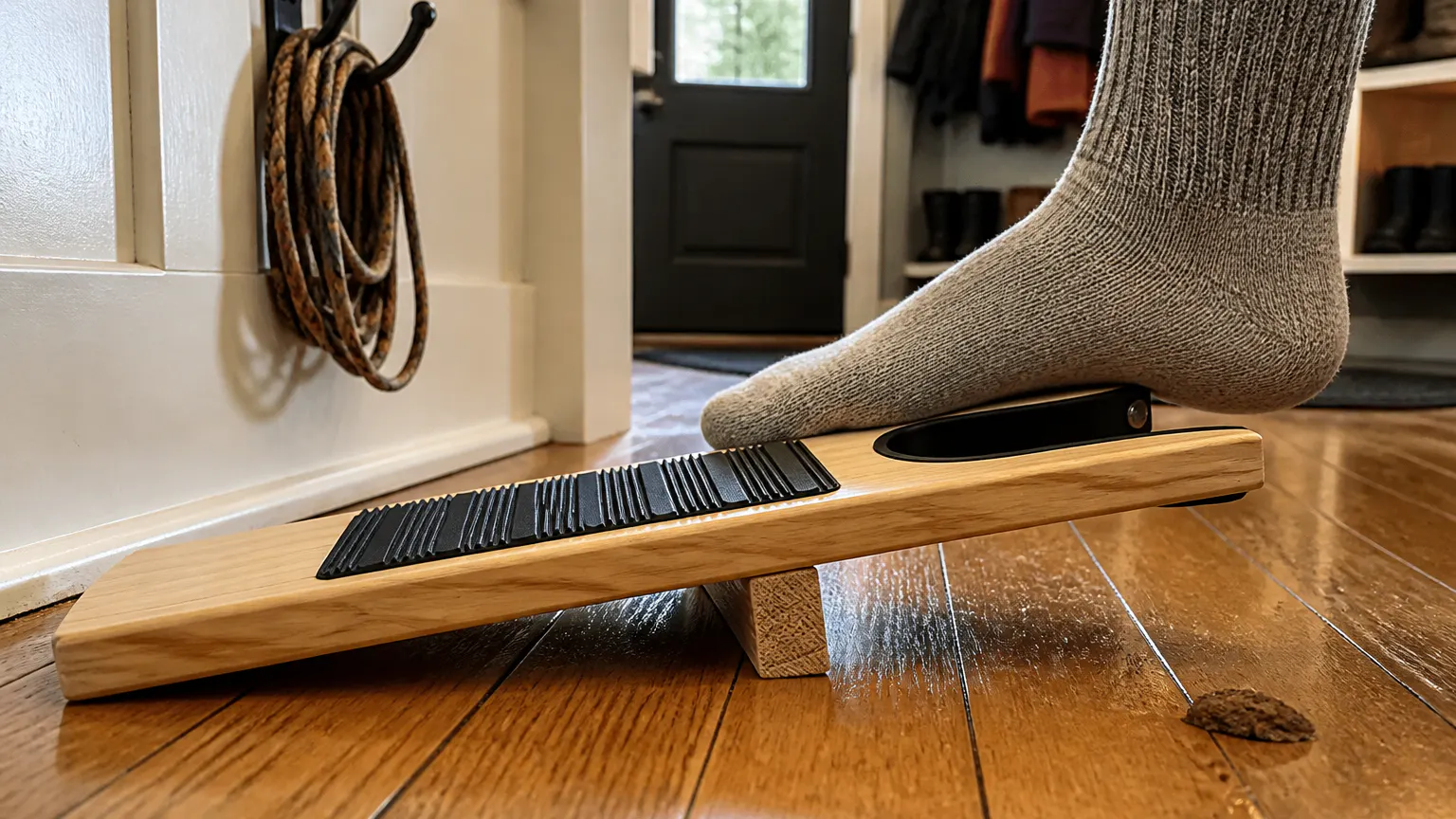
Ribbed grip pad, tested on hardwood
Directional rubber ridges underfoot, and you step your own bodyweight onto the front platform before you lift. Every photo on this page is shot on bare hardwood - the surface everything else slides on.
Stays put while you stand on one leg
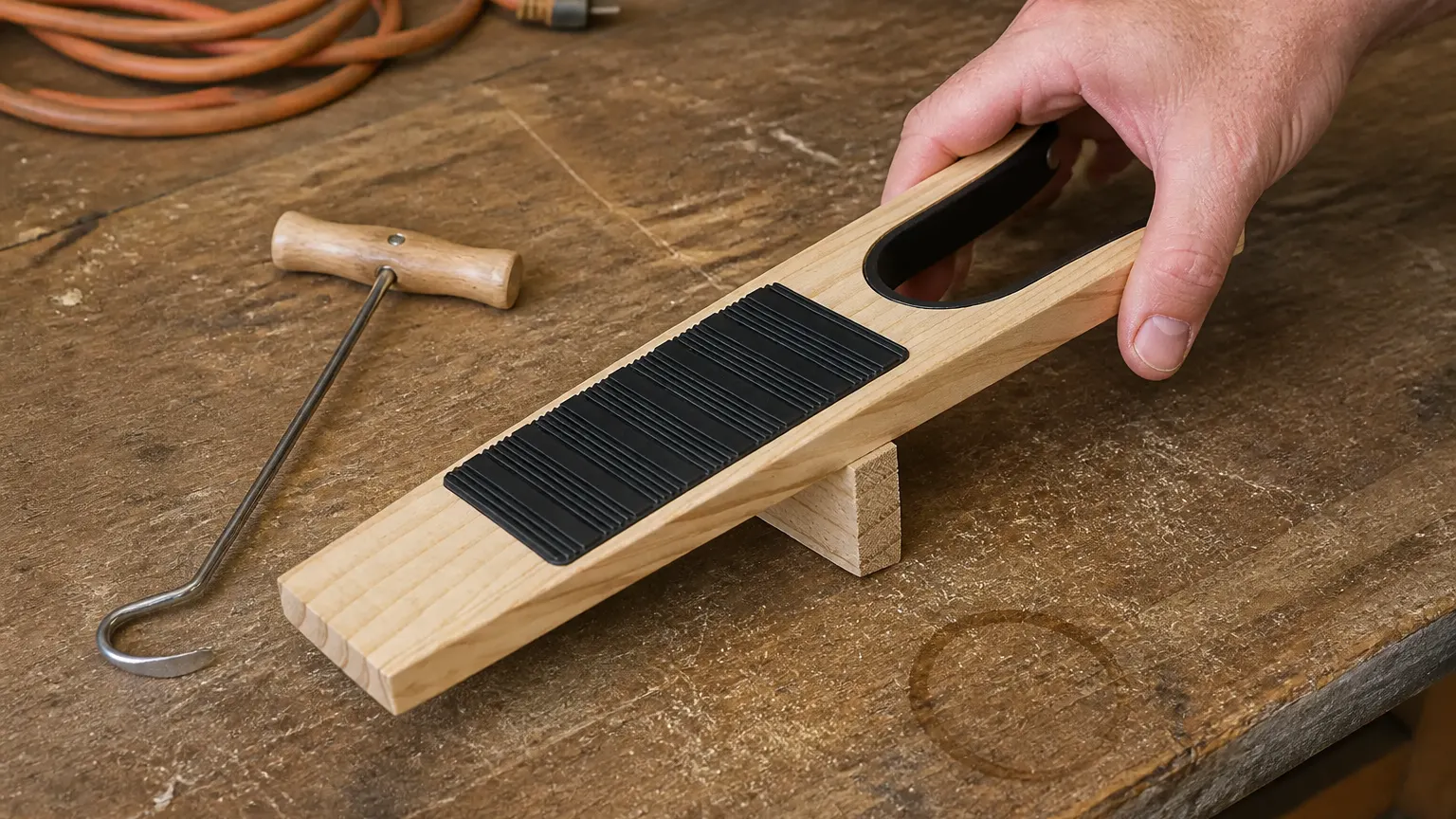
One solid piece. Nothing to snap.
No hinges. No folding mechanism. No glued joint waiting to go brittle. The failure stories in this category all start the same way - a plastic jack that cracked, or a folding one that folded mid-pull. There is nothing here to do either.
Solid wood, not plastic
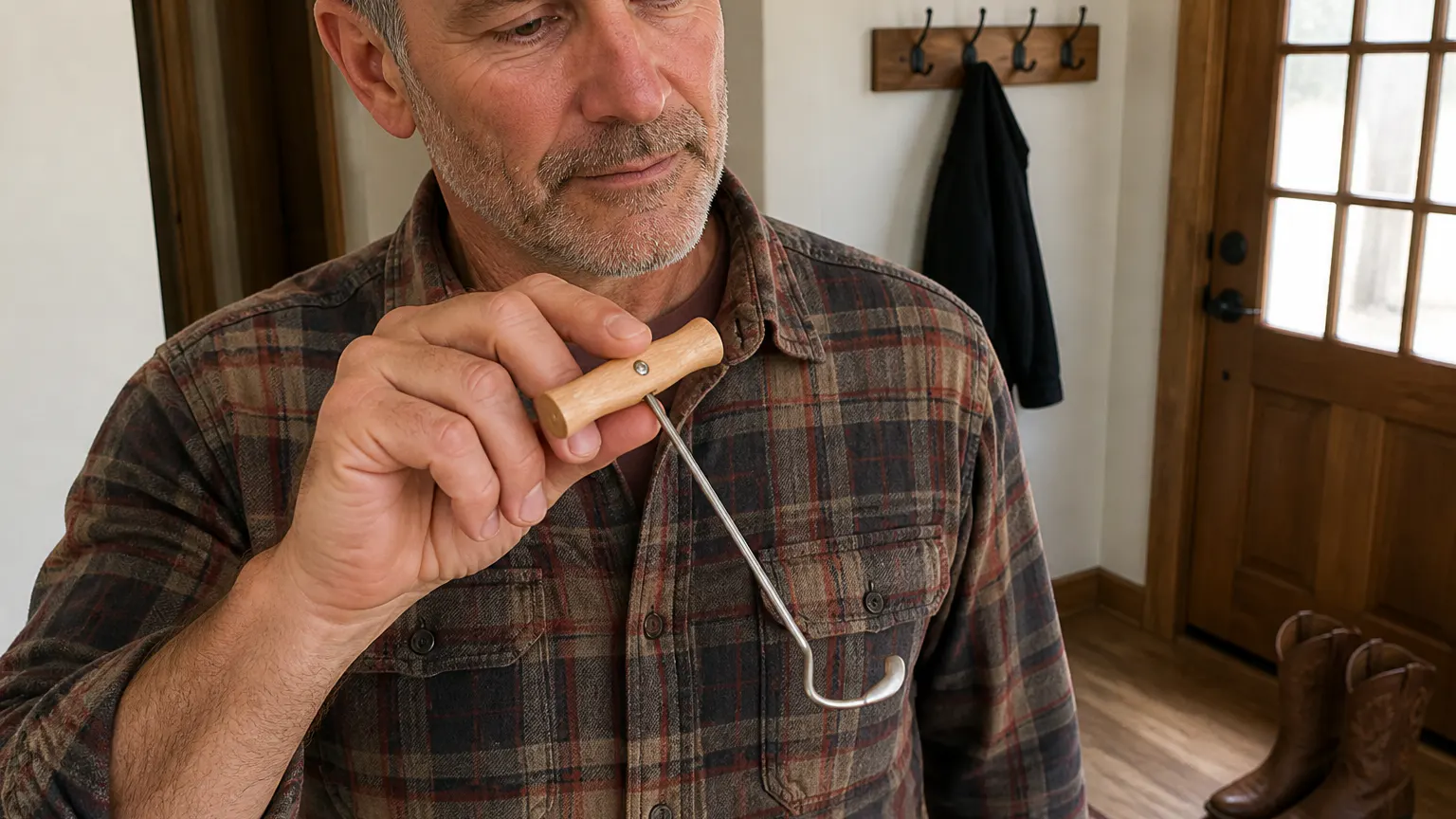
The hook comes in the box
Getting tall boots back on is the other half of the job, and most boot jacks ship alone. The T-handle spreads the pull across your whole palm instead of cutting a line into two fingers.
Two pieces, one set
Real entryways. Real boots. Filmed on their own floors.
Mudrooms, barns, back doors. Phone footage, no studio lighting, no reshoots.
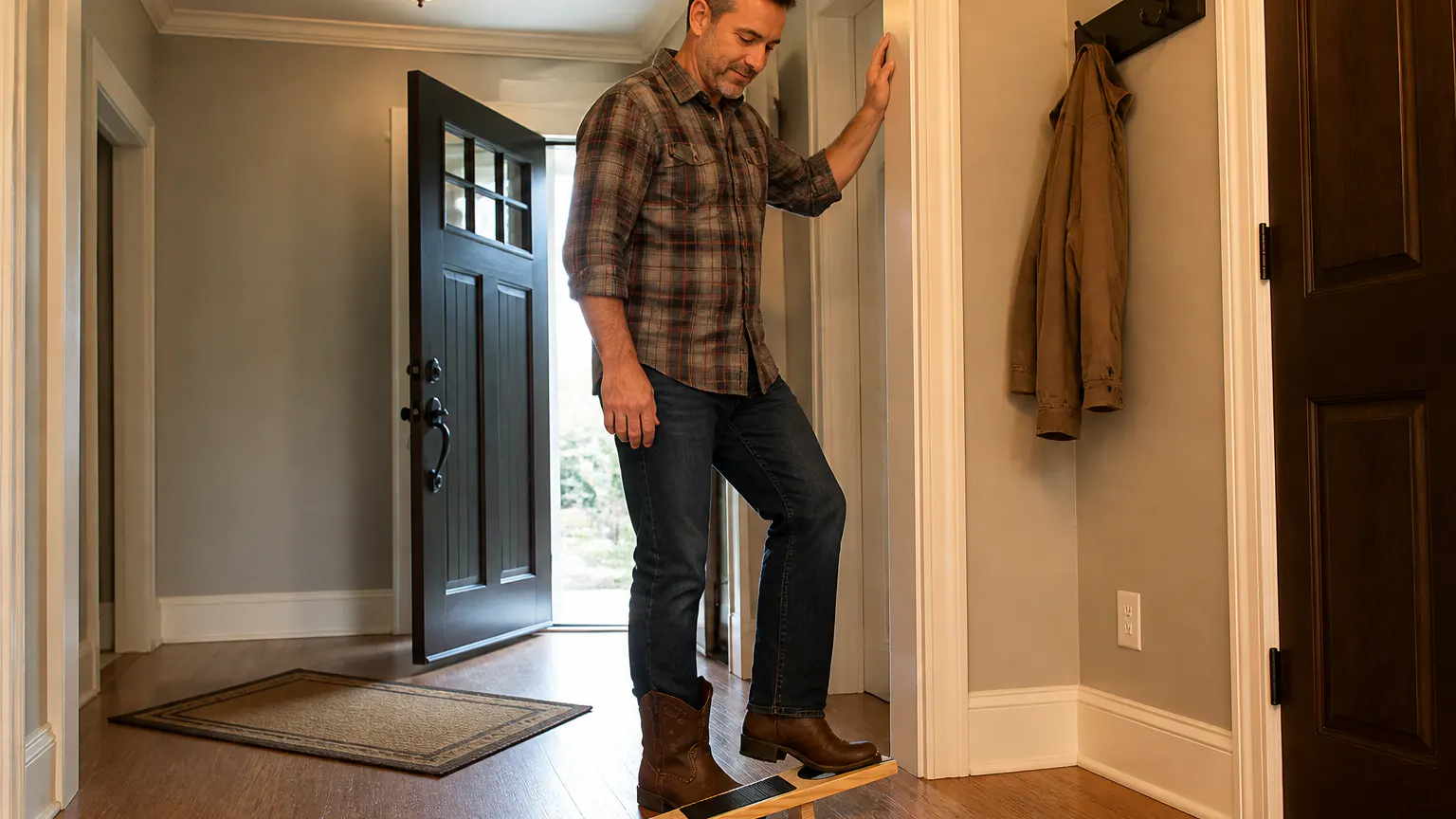
Nobody gets called in anymore.
Boots come off at the door now, not halfway down the hall. You do it standing, in the time it takes to hang up your keys, and you do it yourself.
That is the actual purchase. Not a wedge of wood - the end of the small negotiation you have been having with your own doorway every evening.
Buying for a boot wearer who already has everything? This is the one he uses twice a day, every day.
"They peel off." That is the review we hear most.
Wide heels, hardwood floors, bad backs, expensive leather. The four things people write in about.
★★★★★
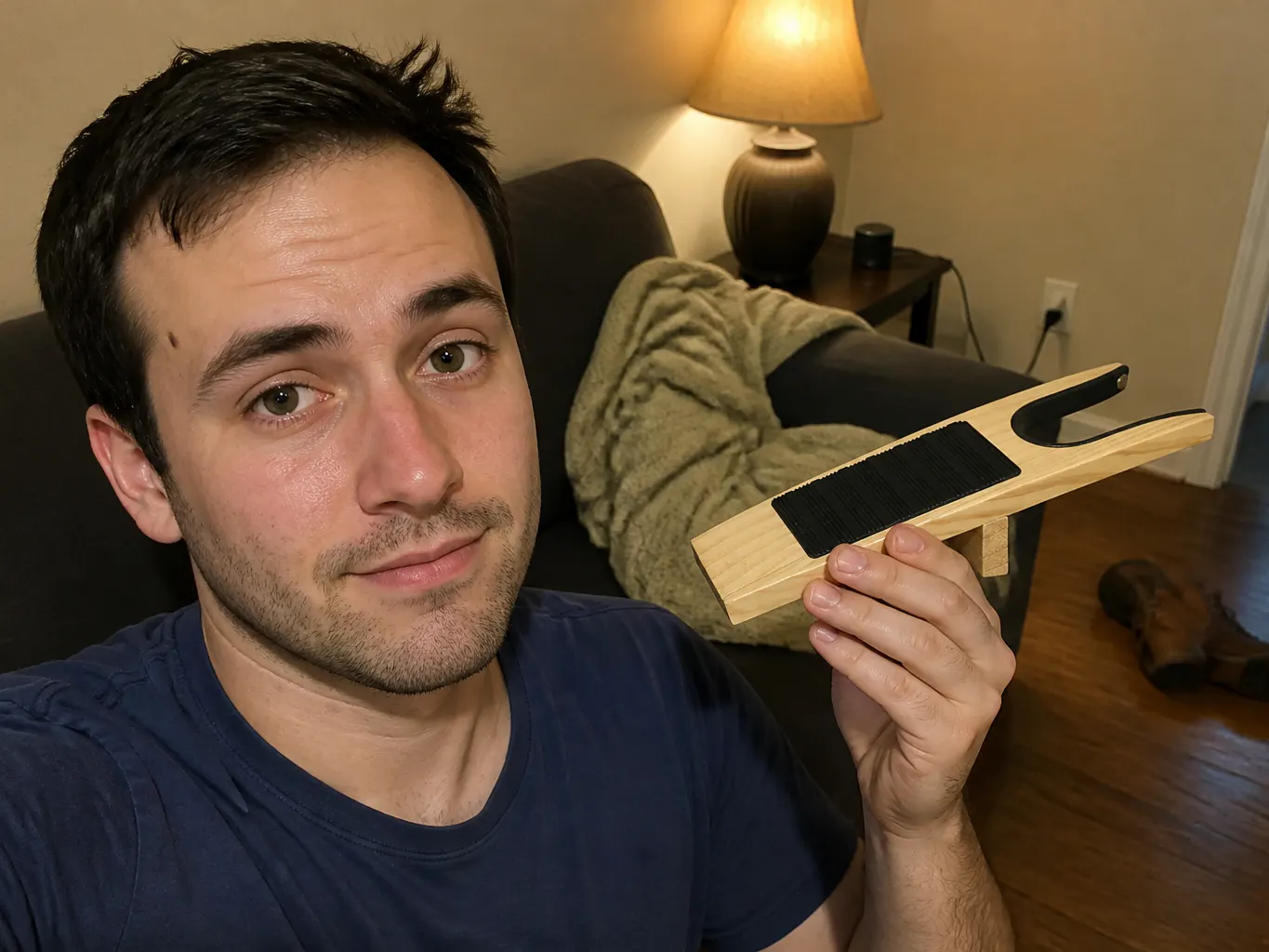
Three seconds a boot. I don't sit down for it anymore.

★★★★★
I wear D-width boots and every jack I'd tried before jammed at the mouth of the notch. This one takes the heel without a fight, and the rubber strip means it grips the heel counter instead of scraping it. Sixteen weeks in and there isn't a mark on the leather.

★★★★★
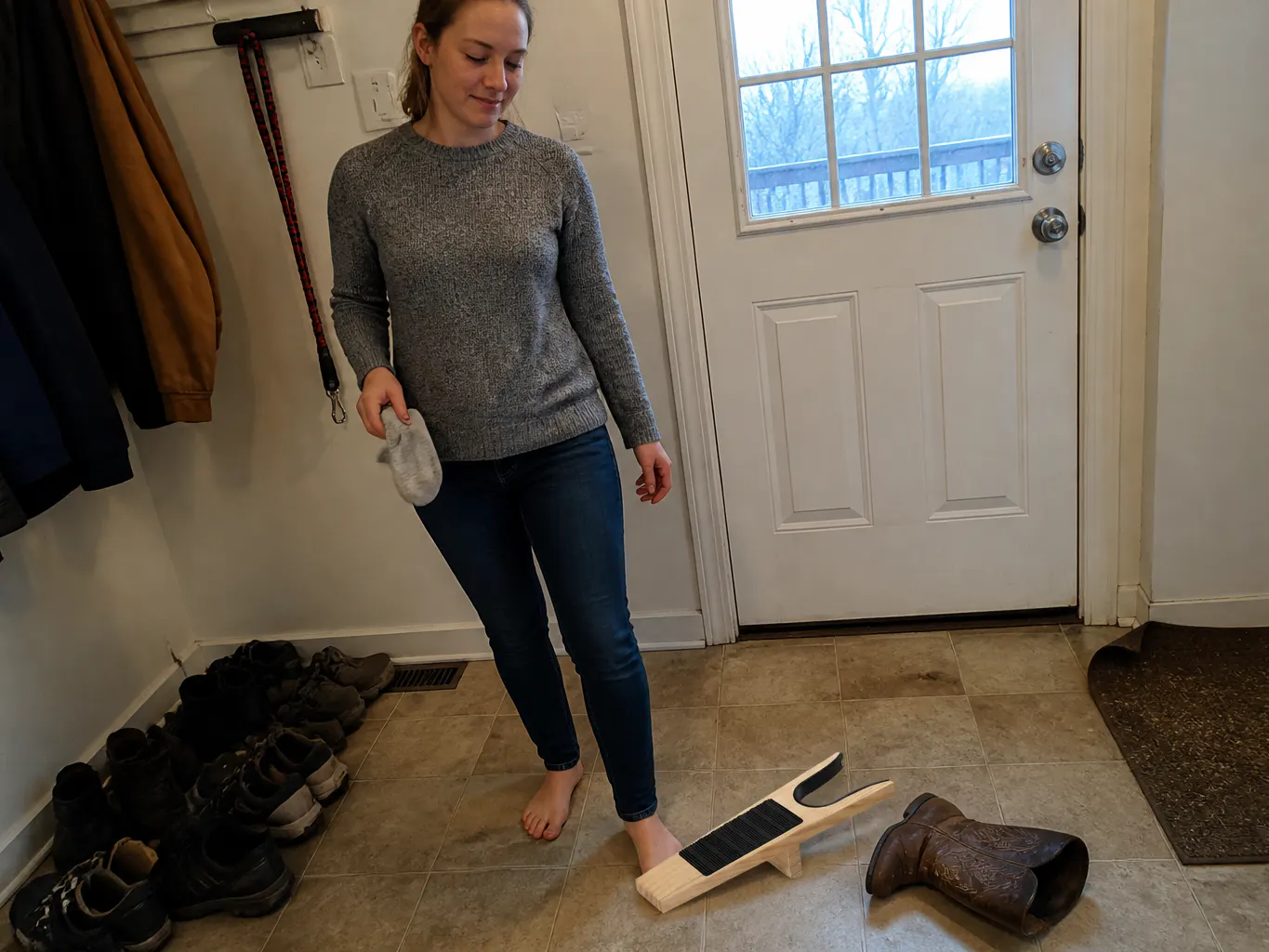
Since the hip replacement I couldn't bend far enough to get my riding boots off. I stopped waiting for my husband to get home. That is the whole review.

★★★★★
Heavy enough that it stays put on hardwood. My old plastic one skated across the room.

★★★★★
Bought it for the jack, kept using the hook. Tall boots used to take two hands and a lot of swearing to get into. The crossbar handle spreads the pull so it doesn't cut into your fingers.

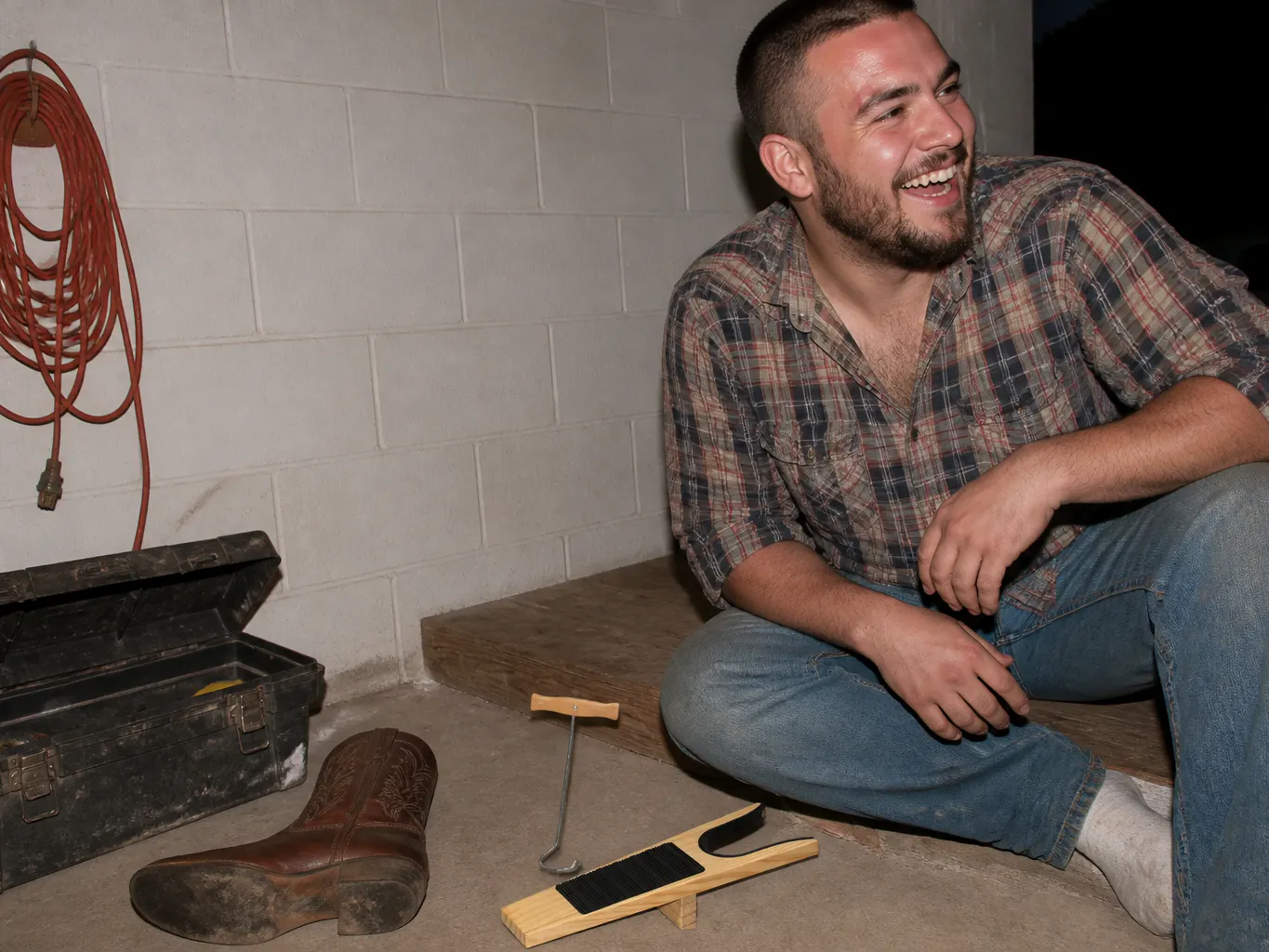
★★★★★
Boots come off at the back door now instead of getting walked through the house.

The questions people actually search before buying one.
Boot damage, floor slip, heel width, and what is in the box.
A bare notch can be. That is why the fork on this one is rubber-lined - the surface that presses against your boot is soft rubber, not raw wood and not bare metal, and it contacts the heel counter at the back of the heel rather than the leather upper.
You can see it in the macro shot further up the page. That single detail is why boot owners with expensive leather use lined jacks and avoid bare-metal ones.
Two things stop it. First, a ribbed rubber pad runs along the underside - directional ridges, not a smooth face. Second, and more importantly, you step down onto the front platform with your opposite foot, so your own bodyweight pins it to the floor before any pulling force is applied.
Every in-use photo on this page is shot on hardwood, because hardwood is the surface a smooth-based jack skates across.
The opening is 9.5cm across the outer width with a 6cm inner heel channel. Those two numbers are printed on the product images so you can measure your own heel before you buy rather than guessing.
Notches that are too narrow for a wide heel are one of the most common complaints in this category, which is exactly why we publish the dimensions instead of saying "fits most boots."
Two reasons: your feet swell over a long day, and a well-fitted boot's heel counter is designed to grip your heel so the boot doesn't slip while you walk. By evening you are fighting both.
Pulling by hand means bending, gripping, and using your back and arms. The jack instead holds the heel in place while your leg does the lifting - so you stay standing, your hands stay off the boot, and there is no hopping on one leg.
Two pieces. The wooden boot jack for taking boots off, and the T-handle steel boot hook for pulling tall boots back on.
Most boot jacks are sold on their own. The hook solves the opposite problem - you drop it into the boot's pull strap and pull on the crossbar, so the force spreads across your palm instead of cutting into two fingers.
The jack is roughly 34cm long and is a single solid piece of wood - no hinges and no folding mechanism, so there is nothing to unlatch or snap.
It is light enough to carry between rooms and low enough to stand against a wall or leave by the door. Most owners keep it in the entryway or mudroom, which is the point: boots come off where you come in.
Free shipping worldwide. Every order, no minimum spend.
Backed by a 30-day money back guarantee and a 1 year warranty. Use it in your own doorway on your own boots - if it isn't what you expected, send it back within 30 days for a full refund.
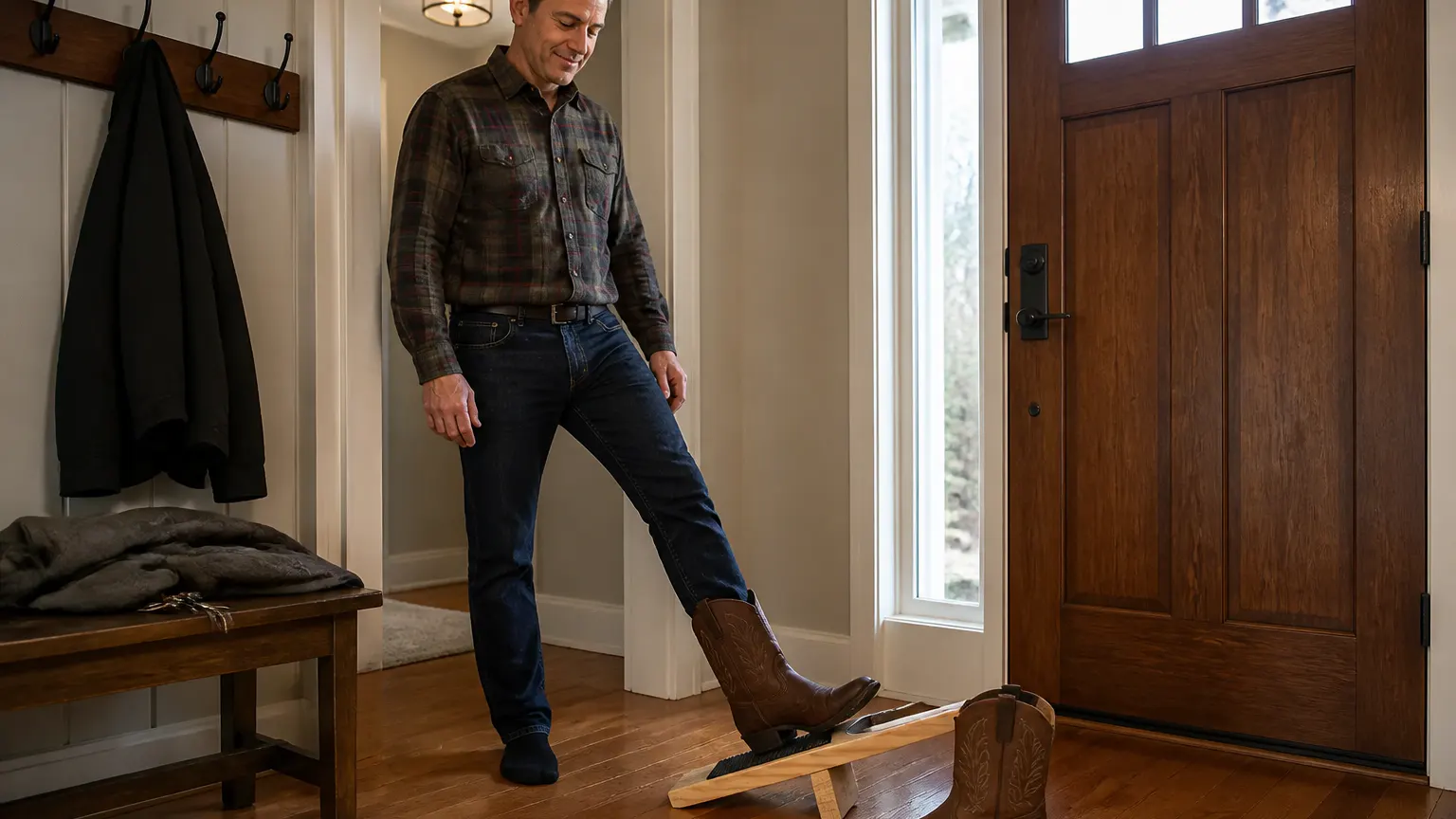
Tonight the doorway fight ends.
Both boots off, standing upright, at the door where they belong - and the hook waiting for tomorrow morning.
Get Your Boots OffFree worldwide shipping · 30-day money back guarantee · 1 year warranty